
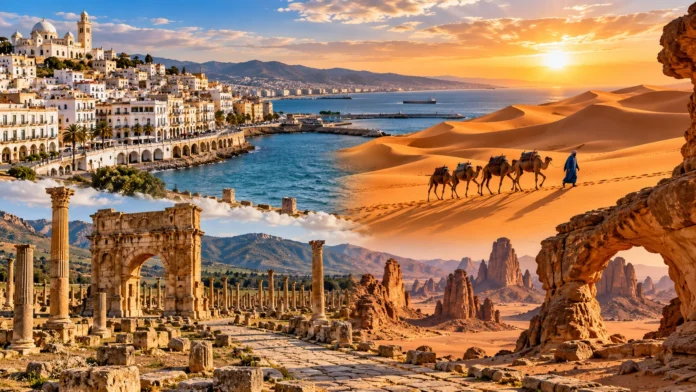
Algeria is one of North Africa’s most fascinating travel destinations, offering a remarkable combination of ancient history, Mediterranean coastlines, traditional cities, and vast desert landscapes. From the historic streets of Algiers to the golden dunes of the Sahara, the country offers experiences that appeal to history lovers, nature enthusiasts, and cultural travelers. Its diverse attractions make Algeria an interesting destination for visitors seeking something different.
This Algeria travel guide explores the best things to do and see across the country, including famous landmarks, UNESCO World Heritage Sites, beautiful cities, and natural wonders. Whether you want to discover Roman ruins, explore traditional markets, admire coastal scenery, or experience Saharan culture, Algeria offers plenty of opportunities for memorable adventures.
Planning a trip to Algeria requires understanding its geography, seasons, transportation options, and entry requirements. The country is geographically large, and travel conditions vary considerably between the northern coastal regions and the southern desert. This guide covers popular destinations, local experiences, practical travel tips, and important information to help you plan an enjoyable journey.
1. Explore Algiers, the Beautiful Capital of Algeria
Algiers is the capital and one of the most attractive cities in Algeria, known for its white buildings, Mediterranean views, and fascinating architecture. Often called Algiers the White, the city combines historic neighborhoods with modern urban life. Visitors can explore impressive landmarks, traditional streets, and lively public spaces while discovering the country’s cultural heritage.
The Casbah of Algiers is one of the city’s most important attractions and a recognized UNESCO World Heritage Site. Its narrow streets, historic houses, mosques, and traditional architecture reflect centuries of cultural influences. Exploring this old neighborhood with a knowledgeable local guide can provide valuable insight into the city’s history and architectural traditions.
Other popular attractions include the Martyrs’ Memorial, the Botanical Garden of Hamma, and Notre Dame d’Afrique. Visitors can also enjoy coastal viewpoints and discover local cafés serving traditional food and drinks. Spending two or three days in Algiers provides a reasonable introduction to the capital’s historic landmarks, cultural attractions, and surrounding neighborhoods.
2. Discover the Ancient Roman Ruins of Tipasa
Tipasa is one of Algeria’s most remarkable archaeological destinations, located along the Mediterranean coast west of Algiers. This ancient settlement developed through Phoenician, Roman, and later historical influences. Its impressive ruins, surrounded by coastal scenery, make it an appealing destination for travelers interested in history, architecture, and outdoor sightseeing.
Visitors can explore the remains of Roman buildings, ancient streets, religious structures, and other archaeological features. The ruins offer an opportunity to understand how ancient communities lived along this important Mediterranean coastline. The combination of historical remains and sea views creates a distinctive atmosphere that makes Tipasa memorable for photographers and cultural travelers.
Tipasa is often included as a day trip from Algiers because of its relatively convenient location. Visitors may also explore the nearby Royal Mausoleum of Mauretania, another important historical landmark. Comfortable walking shoes, drinking water, and suitable weather protection can make exploring these outdoor archaeological sites more enjoyable.
3. Visit Constantine, the City of Bridges
Constantine is one of Algeria’s most visually dramatic cities, famous for its deep gorges, historic bridges, and impressive elevated landscapes. Built around the Rhumel Gorge, the city features spectacular views of buildings and bridges spanning steep rocky formations. Its distinctive geography makes Constantine an unforgettable destination for architecture enthusiasts and photographers.
One of the city’s best-known landmarks is the Sidi M’Cid Bridge, which offers striking views across the surrounding gorge. Visitors can also explore the historic city center, traditional neighborhoods, and cultural attractions. The bridges are not simply transportation routes; they represent an important part of Constantine’s identity and architectural character.
The city’s history includes influences from ancient Numidian, Roman, Ottoman, and French periods. Walking through its streets provides opportunities to observe different architectural styles and discover local traditions. Constantine is especially appealing to travelers who enjoy city exploration, historical landmarks, and dramatic landscapes within an urban setting.
4. Explore the Sahara Desert and the Town of Djanet
The Algerian Sahara covers a substantial part of the country and contains some of its most extraordinary natural landscapes. Vast sand dunes, rocky plateaus, isolated oases, and unusual sandstone formations create scenery unlike the northern coastal regions. Visiting suitable Saharan destinations can provide an opportunity to learn about desert environments and local cultural traditions.
Djanet is a town in southeastern Algeria known for its connection to the Tassili n’Ajjer region. The surrounding landscapes include striking rock formations, desert valleys, and prehistoric rock art. Visitors interested in these areas should arrange experiences through qualified local operators and confirm current access restrictions and security advice before making travel plans.
Desert conditions require careful preparation because temperatures can change significantly between daytime and nighttime. Some remote areas have limited communication, medical facilities, and transportation services. Travelers should avoid independent exploration of unfamiliar remote routes and follow official advice about permitted destinations, approved guides, and any necessary travel authorizations.
5. Discover the Ancient Roman City of Timgad
Timgad is one of North Africa’s most impressive Roman archaeological sites and a UNESCO World Heritage Site. Located near Batna in northeastern Algeria, the city was founded during the reign of Emperor Trajan around AD 100. Its well-preserved urban layout provides valuable insight into Roman architecture, planning, and everyday life.
One of Timgad’s most recognizable features is its grid-based street arrangement, which reflects the organized design of Roman settlements. Visitors can explore the remains of public buildings, a theater, temples, and the famous Arch of Trajan. These structures provide a fascinating glimpse into the city’s historical importance and development.
Exploring Timgad is particularly enjoyable for travelers interested in ancient civilizations and archaeological photography. The exposed location can become uncomfortable during very hot weather, making cooler visiting periods preferable. Visitors should allow sufficient time to explore the site carefully and appreciate the scale of its surviving streets and monuments.
6. Experience Ghardaïa and the M’Zab Valley
Ghardaïa is a distinctive destination in northern Algeria’s Saharan region, known for its traditional architecture, historic settlements, and cultural heritage. The surrounding M’Zab Valley contains fortified towns developed by the Ibadi community. Its unique urban planning and preserved historic neighborhoods have earned the valley recognition as a UNESCO World Heritage Site.
Visitors can discover traditional buildings, local markets, narrow streets, and architectural features designed for the region’s desert environment. The settlements provide an interesting example of how communities adapted their surroundings to climate and social needs. Guided cultural visits can help travelers understand the history and traditions associated with these historic towns.
Respect for local customs is especially important when exploring the M’Zab Valley. Some neighborhoods and religious sites have specific visitor rules, and photography may be restricted in certain areas. Travelers should follow local guidance, wear appropriate clothing for cultural settings, and seek permission before photographing residents or private spaces.
7. Visit Oran for Coastal Views and Cultural Attractions
Oran is a major coastal city in northwestern Algeria, known for its Mediterranean atmosphere, historic architecture, and lively cultural heritage. The city has played an important role in Algerian music and cultural development, particularly through its association with raï music. Visitors can enjoy a combination of sightseeing, waterfront scenery, and urban exploration.
Santa Cruz Fort is among Oran’s most recognizable attractions, standing above the city and providing panoramic views of the coastline. The nearby Chapel of Santa Cruz also contributes to the area’s historical character. Visitors can explore central squares, historic buildings, and neighborhoods that reflect different periods of the city’s development.
Oran offers opportunities to enjoy local restaurants, traditional markets, and coastal surroundings. Its location makes it an appealing destination for travelers exploring western Algeria. Spring and autumn can be comfortable seasons for sightseeing, while summer attracts visitors interested in Mediterranean coastal experiences and outdoor activities.
8. Explore Djémila and Its Historic Roman Architecture
Djémila is another remarkable UNESCO-listed Roman archaeological site located in northeastern Algeria near Sétif. The ancient settlement developed in a mountainous landscape and is known for its surviving ruins. Its position among surrounding hills creates a distinctive setting that combines historical exploration with attractive natural scenery.
The archaeological remains include temples, public squares, religious buildings, and other structures from different periods of Roman occupation. Visitors can observe how the city’s design adapted to its uneven terrain. Exploring the site provides an opportunity to understand the architectural achievements and daily activities of communities that lived there centuries ago.
Djémila is particularly rewarding for travelers who enjoy exploring open-air historical attractions. Because the site covers a substantial area, comfortable footwear and enough time for walking are recommended. Visiting during mild weather can make the experience more enjoyable, especially when spending several hours examining ancient structures and surrounding landscapes.
9. Discover Tlemcen and Its Architectural Heritage
Tlemcen is a historic city in northwestern Algeria, celebrated for its Islamic architecture, cultural traditions, and beautiful surroundings. Its history reflects influences from several North African dynasties and trading networks. Travelers interested in religious architecture, traditional craftsmanship, and historic urban environments will find numerous attractions worth exploring.
The Great Mosque of Tlemcen is one of the city’s important historic landmarks, known for its architectural and cultural significance. Visitors can also discover the Mansourah ruins and other heritage sites connected to the region’s past. Traditional streets and markets provide additional opportunities to experience the city’s local atmosphere.
Tlemcen is surrounded by scenic hills and natural landscapes that complement its historical attractions. Travelers can combine city sightseeing with visits to nearby recreational areas when conditions allow. Spending time in Tlemcen provides a broader understanding of western Algeria’s cultural heritage beyond the country’s more frequently visited coastal cities.
10. Explore Algeria’s Mediterranean Beaches and Coastline
Algeria has a long Mediterranean coastline featuring sandy beaches, rocky cliffs, coastal towns, and scenic landscapes. The northern region offers a different travel experience from the country’s vast desert interior. Visitors interested in relaxing coastal scenery can explore suitable beaches and waterfront areas near several major cities.
Coastal destinations around Béjaïa, Jijel, and Skikda are known for attractive landscapes and opportunities to appreciate the Mediterranean environment. The Gouraya area near Béjaïa offers particularly interesting coastal and mountain scenery. Visitors can enjoy viewpoints, local food, and designated recreational areas while discovering the natural character of northern Algeria.
Summer is generally the most popular season for beach visits, although coastal areas may become crowded during holiday periods. Spring and autumn can provide comfortable conditions for coastal sightseeing and photography. Always follow local swimming guidance, observe weather conditions, and choose officially accessible beaches with appropriate safety facilities.
Best Time to Visit Algeria for Different Experiences
The best time to visit Algeria depends on the regions and activities included in your itinerary. Northern coastal cities generally experience Mediterranean weather, with warm summers and cooler, wetter winters. Spring and autumn often provide comfortable temperatures for walking, sightseeing, and exploring historical attractions.
The Sahara has a dramatically different climate, with extremely hot summer conditions and significant temperature variations between day and night. Cooler months are generally more suitable for approved desert tourism activities, although nights can become cold. Visitors should plan carefully and verify regional weather and access conditions before traveling.
Spring is particularly appealing for travelers interested in combining historical cities, coastal landscapes, and cultural attractions. Autumn can also provide pleasant conditions across many northern destinations. Travelers visiting multiple regions should prepare for different temperatures and remember that seasonal conditions may influence transportation, accommodation, and available activities.
What to Eat in Algeria: Traditional Food and Local Specialties
Algerian cuisine reflects a combination of North African, Mediterranean, Amazigh, Arab, and regional culinary traditions. Meals often feature grains, vegetables, legumes, spices, and locally prepared breads. Exploring traditional restaurants and markets is an enjoyable way to learn about Algerian culture while discovering flavors that vary across different regions.
Couscous is one of Algeria’s most recognizable dishes, commonly prepared with vegetables, broth, and different ingredients depending on local traditions. Other popular foods include chorba, a flavorful soup, and rechta, a noodle-based dish associated with Algerian cuisine. Fresh bread and traditional pastries are also important parts of many local meals.
Visitors can explore bakeries, restaurants, and local food markets to experience regional specialties. Food preparation styles and ingredients may differ between coastal cities, mountainous regions, and Saharan communities. Travelers with food allergies or dietary restrictions should communicate their requirements clearly and confirm ingredients before ordering unfamiliar dishes.
How to Travel Around Algeria
Traveling around Algeria requires planning because the country covers a large geographical area and destinations can be separated by considerable distances. Major northern cities are connected through road networks, rail services, and domestic air routes. The most appropriate transportation method depends on the locations being visited, travel schedules, and available services.
Trains can be useful for journeys between selected northern cities, while buses and taxis provide additional transportation options. Domestic flights may help reduce travel time when visiting distant regions. Travelers should confirm schedules and ticket arrangements through reliable local providers because transportation availability can change.
Remote desert travel requires additional consideration because public transportation and infrastructure can be limited outside major settlements. Some areas may have travel restrictions or require approved guides and special arrangements. Visitors should follow current official security guidance and avoid planning journeys through restricted border regions or isolated routes without appropriate authorization.
Important Travel Tips Before Visiting Algeria
Before visiting Algeria, check the entry requirements that apply to your nationality. Many international visitors need a visa obtained before travel, although specific arrangements and limited exceptions may apply. Passport validity rules, supporting documents, and application procedures should be confirmed with the relevant Algerian diplomatic authorities.
Travel safety deserves particular attention because government advisories warn against visiting certain border regions and other areas with elevated security risks. Visitors should review current official guidance before finalizing an itinerary, particularly when considering southern Algeria. Reliable accommodation, appropriate insurance, and local assistance can help travelers make informed arrangements.
Arabic and Tamazight are Algeria’s official languages, while French is widely used in many urban settings. Learning a few common greetings can make everyday interactions easier and demonstrate respect for local culture. Carry suitable payment methods, dress respectfully when visiting religious or traditional areas, and ask permission before photographing people.
How Many Days Do You Need to Explore Algeria?
The ideal length of an Algeria trip depends on the destinations you want to experience. A short visit of five to seven days can provide enough time to explore Algiers and selected nearby attractions. This approach is suitable for first-time visitors who prefer a relaxed introduction rather than an extensive journey across the country.
A trip lasting ten to fourteen days allows more flexibility to include several northern destinations. Travelers might combine Algiers, Tipasa, Constantine, and selected Roman archaeological sites, depending on transportation connections. Focusing on manageable regions can reduce travel fatigue and create more time for meaningful sightseeing.
Longer itineraries may include approved Saharan destinations, additional coastal cities, or lesser-known cultural attractions. However, security guidance, travel permissions, and local arrangements should shape any plans involving remote areas. Rather than attempting to visit every attraction, prioritize destinations that match your interests and provide sufficient time to experience them comfortably.
Conclusion
Algeria is a remarkable travel destination filled with historical landmarks, fascinating cities, Mediterranean scenery, and dramatic desert landscapes. From the Casbah of Algiers and Roman ruins of Timgad to the bridges of Constantine, the country offers a wide variety of cultural and natural attractions. Each region provides a different perspective on Algeria’s history and traditions.
Planning a successful Algeria vacation involves choosing suitable destinations, understanding seasonal weather, and arranging dependable transportation. Spring and autumn are often enjoyable for exploring northern cities, while desert travel requires more careful preparation. Checking entry requirements and current security guidance is particularly important before visiting remote or restricted regions.
Whether you are interested in ancient history, cultural experiences, scenic coastlines, or traditional cuisine, Algeria offers many opportunities for memorable travel. Start with destinations that suit your interests and plan a realistic itinerary. With thoughtful preparation and respect for local communities, your journey can become a rewarding introduction to this fascinating North African country.
Frequently Asked Questions
What Are the Best Places to Visit in Algeria?
Popular destinations include Algiers, Tipasa, Constantine, Oran, Timgad, Djémila, Tlemcen, and Ghardaïa. Algeria also has spectacular Sahara landscapes, although access to some desert regions requires special arrangements and careful safety planning.
Is Algeria Safe for Tourists?
Safety varies considerably by region. Major tourist cities receive visitors, but several border and remote areas have serious security warnings. Review current government travel advisories before arranging transportation or accommodation.
What Is the Best Month to Visit Algeria?
April, May, September, and October are often pleasant for exploring northern Algeria. Cooler months may be preferable for permitted Sahara visits, depending on local conditions and current travel restrictions.
Do Tourists Need a Visa to Visit Algeria?
Many foreign nationals require a visa before entering Algeria. Requirements depend on nationality, travel purpose, and applicable exceptions. Check the latest information with an Algerian embassy or consulate before departure.
How Many Days Are Enough for an Algeria Trip?
Five to seven days can be suitable for exploring Algiers and nearby attractions. Ten to fourteen days allows a more varied northern itinerary, while additional regions require more travel time and planning.

