
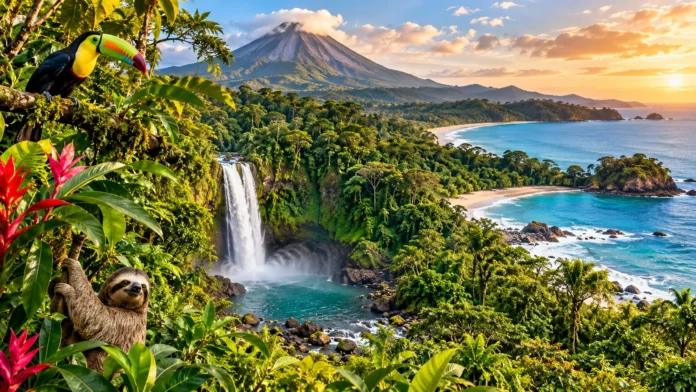
Why Costa Rica Is Worth Visiting
Costa Rica is one of Central America’s most exciting destinations for travelers who enjoy beaches, rainforests, wildlife, volcanoes, and outdoor adventure. A single trip can include hiking through cloud forests, relaxing beside the Pacific Ocean, watching tropical animals, and soaking near volcanic landscapes. This variety makes the country suitable for couples, families, solo travelers, and nature-focused vacations.
One of Costa Rica’s greatest strengths is how different each region feels. The Pacific coast offers lively beach towns and dramatic sunsets, while the Caribbean side has a more relaxed tropical atmosphere. Inland areas provide volcanoes, mountain forests, waterfalls, coffee-growing landscapes, and cooler temperatures that create a completely different experience from the coast.
You do not need to visit every famous attraction during one vacation. Costa Rica is best enjoyed at a comfortable pace, with enough time to appreciate wildlife, scenery, and local communities rather than constantly changing hotels. Choosing three or four regions can create a balanced itinerary that combines adventure, relaxation, culture, and memorable natural attractions.
Explore Arenal Volcano and La Fortuna
Arenal is one of the most recognizable places to visit in Costa Rica, and nearby La Fortuna provides a convenient base for exploring the region. The volcanic landscape creates a dramatic background for hiking, waterfalls, wildlife experiences, and outdoor activities. Travelers can easily spend several days here without repeating the same type of experience.
Hiking around the Arenal area allows visitors to see tropical vegetation, lava-shaped landscapes, and impressive volcano views when weather conditions are clear. La Fortuna Waterfall is another popular natural attraction, surrounded by lush greenery and a powerful tropical setting. Comfortable shoes and lightweight rain protection are useful because weather can change quickly throughout the region.
The area is also known for warm thermal experiences created by the volcanic environment. After hiking or adventure activities, relaxing in hot water can be an enjoyable way to end the day. La Fortuna also offers restaurants, accommodations, and tour options for different budgets, making it particularly easy for first-time Costa Rica visitors.
Discover the Monteverde Cloud Forest
Monteverde offers one of Costa Rica’s most distinctive natural environments. The cool, misty cloud forest feels very different from lowland tropical beaches and hotter rainforests. Moss-covered trees, dense vegetation, mountain views, and abundant birdlife make the region especially attractive to hikers, photographers, and travelers interested in ecology and wildlife.
Walking through the forest is the main experience, whether you choose gentle trails or longer nature-focused excursions. Early mornings can be particularly rewarding because forests are quieter and wildlife activity may be easier to notice. A knowledgeable guide can help identify birds, insects, plants, and animals that visitors might otherwise walk past without seeing.
Monteverde is also famous for adventure activities such as hanging bridges and ziplining through forested landscapes. These experiences provide different perspectives on the tree canopy while adding excitement to a nature-focused itinerary. Evenings can feel noticeably cooler than coastal destinations, so bringing a light jacket or sweater is useful despite Costa Rica’s tropical reputation.
Relax and Explore Manuel Antonio
Manuel Antonio combines rainforest scenery with beautiful Pacific beaches, making it one of Costa Rica’s most appealing destinations for first-time travelers. Visitors can walk through tropical forest and then relax beside the ocean within the same day. The surrounding region also offers restaurants, accommodations, viewpoints, and outdoor activities suited to different travel styles.
Wildlife is one of the biggest attractions around Manuel Antonio. Monkeys, sloths, colorful birds, reptiles, and other tropical species may be seen in forested areas, although sightings are never guaranteed. Moving quietly and observing animals from a respectful distance creates a better experience while avoiding unnecessary disturbance to the natural environment.
The beaches around the area make it easy to balance active sightseeing with relaxation. Spend the morning walking through nature, then use the afternoon for swimming, sunbathing, or enjoying coastal views. Because the region is popular, planning major activities in advance and starting early can make your days feel more relaxed and organized.
Experience Tortuguero’s Waterways and Wildlife
Tortuguero offers a completely different Costa Rica experience because waterways, lagoons, rainforest, and wildlife define much of the region. Instead of relying mainly on roads, visitors often explore the landscape by boat. This creates a slower, immersive experience where the surrounding forest and water become central parts of the journey.
Guided boat tours can provide opportunities to observe monkeys, birds, reptiles, and other wildlife living near the canals. Early morning trips are especially popular because the waterways often feel peaceful and atmospheric. Binoculars can be useful, while lightweight rain gear helps you stay comfortable when tropical showers appear unexpectedly.
Tortuguero is also strongly associated with sea turtles and conservation, although wildlife seasons vary throughout the year. Visitors should choose responsible experiences that respect nesting areas and local guidance. Staying at least one or two nights allows you to appreciate the remote atmosphere rather than rushing through the region as a quick excursion.
Visit Corcovado and the Osa Peninsula
The Osa Peninsula is an excellent choice for travelers who want a more remote and adventurous Costa Rica experience. Dense rainforest, rugged beaches, wildlife, and fewer developed tourist areas give the region a wild atmosphere. Corcovado is the major attraction, particularly for visitors interested in serious nature exploration and tropical biodiversity.
Exploring this region usually requires more planning than visiting popular areas such as La Fortuna or Manuel Antonio. Guided outings can help travelers navigate rainforest environments while increasing the chances of noticing wildlife and understanding the ecosystem. Conditions can be hot, humid, muddy, and physically demanding, so realistic preparation is important.
The Osa Peninsula rewards travelers who are comfortable with a slower, nature-focused itinerary. Instead of nightlife and large resort areas, expect early mornings, wildlife sounds, rainforest walks, and coastal scenery. Spending several days provides enough time to appreciate the region without turning each day into a rushed sequence of long tours.
Enjoy the Beaches of Guanacaste
Guanacaste is one of Costa Rica’s most popular regions for beach vacations. The Pacific coastline includes lively resort areas, quieter beaches, surfing destinations, and beautiful sunset views. Travelers can choose between comfortable resort-style stays and smaller coastal communities depending on whether they prefer convenience, nightlife, water activities, or a more peaceful atmosphere.
Beach days can include swimming, surfing, sailing, snorkeling, or simply relaxing on the sand. Conditions vary considerably from one beach to another, so choose locations based on your preferred activities rather than assuming every part of the coastline is identical. Some areas are better for beginner surfers, while others suit families or travelers seeking calmer surroundings.
Guanacaste also provides access to inland adventures, including volcanic landscapes, forests, and hiking opportunities. This makes it possible to combine several lazy beach days with more active excursions. Renting a car can provide flexibility, although travelers should consider road conditions and driving distances carefully when planning trips between coastal communities.
Explore Puerto Viejo and the Caribbean Coast
Costa Rica’s Caribbean coast offers a different atmosphere from the Pacific, with lush vegetation, tropical beaches, colorful communities, and distinctive food and culture. Puerto Viejo is one of the best-known destinations in the region and provides a relaxed base for travelers interested in beaches, cycling, restaurants, wildlife, and easygoing coastal life.
Nearby beaches offer different personalities, from quiet stretches of sand to areas popular with surfers. Renting a bicycle can be an enjoyable way to explore shorter distances between beaches and local communities. The combination of tropical forest and coastline gives the region a lush appearance that feels noticeably different from some drier Pacific areas.
Cahuita is another worthwhile stop for nature and coastal scenery. Visitors can combine walking through tropical environments with time beside the Caribbean Sea. Staying several nights on this side of the country allows you to experience its slower rhythm, local food influences, and distinctive atmosphere rather than treating it as a brief detour.
Discover the Nicoya Peninsula
The Nicoya Peninsula is ideal for travelers who want beaches, surfing, wellness experiences, and smaller coastal communities. Destinations such as Santa Teresa and Montezuma attract visitors with relaxed surroundings and access to beautiful Pacific landscapes. The region can feel more independent and slower-paced than larger resort centers, making it attractive for longer stays.
Santa Teresa is especially popular with surfers and travelers who enjoy beach cafés, yoga, and sunset-focused evenings. Roads and transportation can require patience, but the relaxed atmosphere is part of the destination’s appeal. Montezuma offers another coastal experience, with a smaller-town feeling and access to waterfalls and nearby natural scenery.
The peninsula works best for travelers who do not mind slower movement between places. Instead of trying to visit several beach towns in a few days, choose one main base and explore nearby areas gradually. This approach leaves more time for swimming, surfing, walking, and enjoying the kind of unhurried coastal routine many visitors seek.
See Poás Volcano and the Central Highlands
Poás Volcano provides another opportunity to experience Costa Rica’s volcanic landscapes and can fit naturally into an itinerary around the Central Valley. The highland environment feels cooler than many coastal regions, while mountain scenery and volcanic features provide a dramatic change from beaches. Weather and visibility can shift quickly, so flexible expectations are useful.
The surrounding highlands also contain coffee-growing areas, gardens, small towns, and countryside landscapes. Travelers interested in coffee can include a plantation-style experience to learn more about cultivation and preparation. Combining natural attractions with agricultural experiences creates a more varied day than visiting only one volcano viewpoint and immediately returning.
Because mountain conditions can include mist or rain, mornings often work well for outdoor sightseeing, although clear views can never be guaranteed. Bring a light layer because temperatures may feel cooler at elevation. These central highland destinations are particularly useful when beginning or ending a trip near the country’s main urban areas.
Spend Time in San José and the Central Valley
Many visitors pass through San José quickly on the way to beaches or rainforests, but the capital can add cultural context to a Costa Rica trip. Museums, markets, historic architecture, theaters, restaurants, and neighborhoods provide a different experience from nature-focused destinations. Spending a day here can help you see more of the country beyond its famous landscapes.
Markets can be especially interesting for travelers who enjoy local food and everyday city life. Fresh produce, traditional meals, coffee, and small businesses create a lively contrast with polished tourist destinations. Museums can also provide background on Costa Rican history, art, archaeology, and national identity before you continue into rural regions.
The Central Valley surrounding the city contains smaller towns, mountain scenery, farms, and coffee-growing landscapes. It can be a convenient region for a relaxed first or final day when long-distance travel feels unnecessary. Staying briefly also gives travelers time to organize transportation and adjust before moving toward more remote destinations.
Plan the Perfect Costa Rica Itinerary
A seven-day Costa Rica trip works best when focused on two or three main areas. For example, you could combine La Fortuna with Monteverde and a Pacific beach destination. This creates variety without spending too much of the vacation packing, checking out of hotels, and sitting in vehicles between distant regions.
With ten to fourteen days, you can comfortably add another coastline or wildlife-focused destination. A longer itinerary might include Arenal, Monteverde, Manuel Antonio, and the Caribbean coast or Osa Peninsula. Build travel days realistically because mountainous terrain and rural roads can make relatively short distances take longer than expected.
Pack lightweight clothing, comfortable walking shoes, insect repellent, sun protection, and rain gear regardless of your route. Costa Rica’s weather varies by elevation and region, so flexibility is valuable. Leaving some unscheduled time also allows you to slow down after adventure days and enjoy unexpected wildlife sightings, beaches, restaurants, or scenic stops.
Conclusion
Costa Rica offers an impressive range of attractions within a relatively compact country. Arenal, Monteverde, Manuel Antonio, Tortuguero, Corcovado, Guanacaste, the Nicoya Peninsula, and the Caribbean coast each provide a different combination of wildlife, beaches, forests, volcanoes, and outdoor adventure.
The best Costa Rica itinerary depends on what you enjoy most. Wildlife lovers may prioritize Tortuguero and the Osa Peninsula, while beach travelers can focus on Guanacaste, Nicoya, or the Caribbean coast. First-time visitors often enjoy combining a volcano region, cloud forest, and coastal destination for a balanced introduction.
Avoid trying to see the entire country in one short trip. Choose a manageable number of places and give yourself enough time to hike, relax, observe wildlife, and experience local communities. A slower approach often reveals exactly why Costa Rica has become such a memorable destination for nature-focused travelers.
FAQs
What are the best places to visit in Costa Rica for first-time travelers?
La Fortuna and Arenal, Monteverde, and Manuel Antonio make an excellent combination. Together, they provide volcano scenery, cloud forests, wildlife, outdoor adventures, and beaches without requiring visits to every region.
How many days do you need in Costa Rica?
Seven to ten days works well for two or three main regions. Around two weeks provides more flexibility for adding the Caribbean coast, Guanacaste, Tortuguero, or the Osa Peninsula.
What is the best place in Costa Rica for wildlife?
Tortuguero, Corcovado, and Manuel Antonio are excellent wildlife-focused destinations. Different regions support different ecosystems and species, so combining several natural areas can create a more varied wildlife experience.
Which Costa Rica coast is better for beaches?
Both coasts offer beautiful beaches. The Pacific has more famous resort and surfing areas, while the Caribbean coast provides lush tropical scenery and a different cultural atmosphere. The best choice depends on your travel style.
Is Costa Rica good for adventure travel?
Yes. Popular activities include hiking, ziplining, surfing, rafting, snorkeling, wildlife tours, waterfall visits, and volcano excursions. Choose activities suited to your fitness level and follow local safety guidance for outdoor adventures.

