
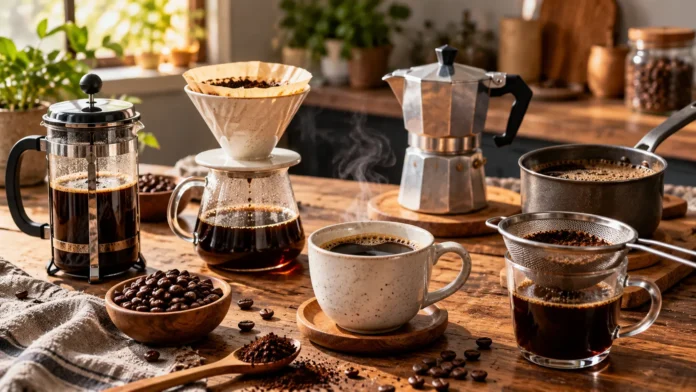
Making a delicious cup of coffee does not always require an expensive machine or special equipment. Whether your coffee maker stops working, you are traveling, or you simply prefer traditional brewing methods, there are several easy ways to prepare coffee at home. Basic kitchen items such as a saucepan, mug, spoon, and strainer can help you make a satisfying drink. Learning how to make coffee without a coffee maker gives you more flexibility and allows you to enjoy fresh coffee almost anywhere.
Can You Make Coffee Without a Coffee Maker?
Yes, you can make coffee without a coffee maker using simple kitchen tools and ingredients. People have prepared coffee for centuries using basic methods long before electric machines became common. All you need is ground coffee, clean water, and a suitable container. The brewing process involves allowing water to extract flavor from coffee grounds.
Several manual brewing methods can produce enjoyable coffee without specialized equipment. Some involve steeping coffee grounds directly in hot water, while others use a filter or strainer. Each technique creates a slightly different flavor and texture. Choosing the right method depends on your available supplies and how you prefer your coffee.
Making coffee manually also gives you control over important brewing details. You can adjust the amount of coffee, water temperature, and brewing time to suit your taste. These small changes affect the final drink’s strength and flavor. With a little practice, you can prepare a consistent cup without relying on a machine.
What Do You Need to Make Coffee Without a Machine?
The basic ingredients for homemade coffee are ground coffee and clean drinking water. Freshly ground beans can provide a pleasant aroma, but pre-ground coffee also works well. A mug, spoon, and heat-safe container are useful for most brewing techniques. You may also need a saucepan or kettle to heat water.
Some methods require a simple filter to separate coffee grounds from the finished drink. A clean paper coffee filter, fine-mesh strainer, or suitable reusable cloth can help. Other techniques allow the grounds to settle naturally before pouring. The equipment you choose will depend on the method you want to try.
Before brewing, make sure your tools are clean and suitable for hot liquids. Avoid using containers that are not designed to handle high temperatures. Measuring coffee and water can also improve consistency. Even without professional brewing equipment, basic preparation helps create a pleasant and balanced cup.
How to Make Coffee on the Stove Using a Saucepan
The stovetop method is one of the easiest ways to make coffee without a coffee maker. Start by adding approximately 250 milliliters of water to a small saucepan. Heat the water until it reaches a gentle boil, then remove the pan from the heat. Add about two tablespoons of ground coffee and stir carefully.
Allow the coffee to steep for approximately four minutes so the water can extract its flavor. You can adjust the steeping time depending on how strong you prefer the drink. Avoid continuously boiling the coffee grounds, as excessive heating may create unpleasant bitterness. Gentle brewing usually produces a more balanced flavor.
Once brewing is complete, let the grounds settle briefly at the bottom of the saucepan. Slowly pour the coffee into a mug, leaving most of the grounds behind. A fine-mesh strainer can help remove additional particles. You can then add milk or another preferred ingredient before enjoying your homemade coffee.
How to Make Coffee Using the Cowboy Coffee Method
Cowboy coffee is a traditional brewing technique that requires little more than a pot, water, and ground coffee. It is commonly associated with camping and outdoor cooking. The method involves steeping coffee directly in heated water without a paper filter. Its simplicity makes it useful when specialized brewing equipment is unavailable.
Begin by heating water in a suitable pot until it reaches a boil. Remove the pot from direct heat and add approximately two tablespoons of coffee for each 250 milliliters of water. Stir gently to distribute the grounds. Allow the mixture to steep for about four minutes before serving.
After steeping, leave the pot undisturbed so the grounds can settle. Carefully pour the coffee into a mug without disturbing the sediment. Some fine particles may remain because this method does not use a filter. Pouring slowly helps produce a cleaner drink while preserving the coffee’s natural flavor.
How to Make Coffee With a Mug and Hot Water
The mug method is useful when you have ground coffee but no brewing equipment. It requires only a heat-safe mug, hot water, and a spoon. This technique works well at home, in an office, or while traveling. Although simple, it can produce a satisfying cup when prepared carefully.
Place approximately two tablespoons of medium-ground coffee into a mug. Add about 250 milliliters of hot water that has cooled slightly after boiling. Stir gently to ensure the grounds are evenly saturated. Allow the coffee to steep for around four minutes while the flavor develops.
Once brewing is complete, leave the mug undisturbed for another minute or two. Most grounds will gradually settle toward the bottom. Drink slowly or carefully transfer the coffee into another cup. Avoid stirring again after the grounds settle, as this can make the drink noticeably gritty.
How to Make Coffee With a Paper Filter
A paper coffee filter can help create a cleaner cup by separating the grounds from the brewed liquid. You do not need an electric coffee maker to use one. A suitable filter holder or stable pour-over setup can support the paper while water passes through. This method produces coffee with relatively little sediment.
Place a paper coffee filter inside a suitable holder positioned over a mug or heat-safe container. Add approximately two tablespoons of medium-ground coffee. Slowly pour a little hot water over the grounds to wet them evenly. After about 30 seconds, continue adding the remaining water in small, controlled amounts.
Allow the coffee to drip naturally through the filter into the mug. Avoid filling the filter beyond its capacity or using an unstable setup. The finished drink should contain fewer particles than unfiltered brewing methods. Adjust the amount of coffee or water during future attempts to find your preferred strength.
How to Make Coffee Using a Clean Cloth
A clean cloth can serve as a reusable coffee filter when a paper filter is unavailable. Choose a tightly woven, food-safe cotton cloth that has been thoroughly washed and rinsed. Avoid fabrics containing dyes or detergent residue that could affect the drink. This technique can produce relatively smooth coffee.
Place the cloth securely inside a suitable strainer or filter holder positioned over a heat-safe container. Add ground coffee and slowly pour hot water over it. The liquid passes through the cloth while most grounds remain trapped. Pour carefully to prevent overflowing or spilling hot coffee.
Once brewing is complete, remove the cloth carefully and allow it to cool. Dispose of the used grounds and wash the fabric thoroughly. Dry it completely before storing it for future use. A properly maintained cloth filter can provide a practical alternative to disposable coffee filters.
How to Make Coffee With a Fine-Mesh Strainer
A fine-mesh strainer is another useful kitchen tool for preparing coffee without a machine. It allows you to brew coffee directly in a saucepan or heat-safe container. After steeping, the strainer separates larger coffee grounds from the liquid. This method is convenient because many kitchens already contain a suitable strainer.
Begin by adding ground coffee to hot water and allowing it to steep for approximately four minutes. Use around two tablespoons of coffee for every 250 milliliters of water. Stir gently at the beginning to ensure proper contact between the grounds and water. Avoid excessive stirring near the end of brewing.
Position the strainer securely over a mug and carefully pour the brewed coffee through it. Most larger grounds will remain in the strainer, although very fine particles may pass through. For a clearer drink, use a finer filter if available. Clean the strainer after brewing to remove coffee oils and residue.
How to Make Coffee Without a Filter
Making coffee without a filter is possible because coffee grounds naturally settle after brewing. Methods such as cowboy coffee and direct mug brewing use this simple process. The finished drink may contain some sediment, but filtering equipment is not essential. Careful pouring helps reduce the amount of grounds entering your cup.
Use medium-coarse or coarse coffee grounds when possible because larger particles are easier to separate. Add hot water and allow the coffee to steep for several minutes. Avoid stirring once the brewing period is complete. Leaving the mixture undisturbed encourages the grounds to sink toward the bottom.
Pour the coffee slowly into another mug while keeping the settled grounds inside the brewing container. Stop pouring before reaching the thick layer of sediment. This small adjustment can noticeably improve the drinking experience. Although unfiltered coffee has a different texture, it remains a practical option when equipment is limited.
How to Make Instant Coffee Without a Coffee Maker
Instant coffee is one of the quickest ways to prepare coffee without a machine. Unlike regular ground coffee, instant coffee has already been brewed and processed into soluble granules or powder. These particles dissolve in water rather than requiring extraction and filtering. This makes instant coffee especially convenient for busy mornings.
Add one or two teaspoons of instant coffee to a mug, depending on your preferred strength. Pour in approximately 200 to 250 milliliters of hot water and stir until dissolved. You can adjust the amount according to the product instructions. The entire preparation requires only a few basic steps.
Instant coffee can also be prepared with warm milk or mixed into cold drinks. Some varieties dissolve more easily than others, so check the packaging when using cold water. Adding milk, cinnamon, or another preferred flavor can create variety. This method is particularly useful when time and equipment are limited.
How to Make Cold Brew Coffee Without a Machine
Cold brew coffee is prepared by steeping ground coffee in cool or room-temperature water for an extended period. Unlike traditional hot brewing, it does not require boiling water. The method typically produces a smooth-tasting drink with a different flavor profile. It is especially convenient for preparing coffee in advance.
Combine approximately one part coarsely ground coffee with eight parts water by weight in a clean container. Stir gently to wet the grounds evenly. Cover the container and refrigerate it for around 12 to 18 hours. The long steeping period allows coffee flavors to develop gradually.
After steeping, strain the mixture through a suitable coffee filter or fine cloth. Store the finished coffee in a clean, covered container in the refrigerator. Serve it over ice or dilute it with water or milk if the flavor feels too strong. Adjust the brewing ratio during future batches to suit your taste.
How to Make Iced Coffee Without a Coffee Maker
Iced coffee is a refreshing option when you want a cold drink without using a coffee machine. You can prepare it with manually brewed coffee or instant coffee. The main difference from cold brew is that iced coffee is usually brewed hot before cooling. This creates a familiar coffee flavor served at a lower temperature.
Start by preparing a small amount of strong coffee using your preferred manual method. Allow it to cool before transferring it to a glass containing ice. Add cold water or milk until the drink reaches your preferred strength. Using slightly stronger coffee helps account for dilution as the ice melts.
You can also make iced coffee using instant coffee dissolved in a small amount of warm water. Add cold milk or water and stir thoroughly. Ice cubes complete the drink. Simple additions such as cinnamon or vanilla can provide extra flavor without requiring special brewing equipment.
How to Make Coffee With Milk Without a Machine
Coffee with milk can be prepared using regular brewed coffee or instant coffee. Milk changes the texture and flavor, often making the drink taste smoother. You can use dairy milk or a suitable plant-based alternative. The amount depends on whether you prefer a stronger coffee taste or a milder drink.
For a simple milk coffee, brew a small serving of strong coffee using a saucepan or another manual method. Heat the milk separately until warm, avoiding unnecessary boiling. Pour the coffee into a mug and add milk gradually. Stir gently until the ingredients are combined.
Instant coffee provides another convenient option for preparing milk-based drinks. Dissolve the coffee in a small amount of hot water before adding warm milk. You can also use a handheld whisk to create light foam. Although the result differs from espresso-based café drinks, it offers a comfortable homemade alternative.
How Much Ground Coffee Should You Use Per Cup?
Using the right coffee-to-water ratio is important when brewing without a machine. Too little coffee may produce a weak drink, while too much can create an overly intense flavor. A practical starting point is approximately two tablespoons of ground coffee for 250 milliliters of water. The exact amount can be adjusted.
Coffee measurements vary because different beans and grind sizes have different densities. For greater consistency, consider measuring coffee by weight. A common starting ratio is around 15 grams of coffee for 250 grams of water. This provides a useful baseline for many manual brewing methods.
Personal preference also plays an important role in selecting the ideal coffee strength. Some people enjoy a lighter drink, while others prefer a richer flavor. Adjust one variable at a time so you can understand the results. Keeping the water quantity consistent makes it easier to compare different amounts of coffee.
What Is the Best Water Temperature for Brewing Coffee?
Water temperature affects how efficiently flavors are extracted from coffee grounds. If the water is too cool, some brewing methods may produce weak or underdeveloped flavors. Extremely hot water can also affect extraction, especially when combined with very fine grounds or long brewing times. Controlling temperature helps create consistent results.
For many hot coffee brewing methods, water between approximately 90°C and 96°C works well. You do not necessarily need a thermometer to reach this range. Bring clean water to a boil and allow it to rest briefly before brewing. The exact cooling time depends on the container and surrounding conditions.
Different coffee styles may benefit from slightly different temperatures. Darker roasts can sometimes taste pleasant when brewed with moderately cooler water, while lighter roasts may benefit from higher temperatures. These are preferences rather than strict requirements. Experimenting with temperature can help you discover the flavor you enjoy most.
How Long Should You Brew Coffee Without a Machine?
Brewing time determines how long water remains in contact with coffee grounds. Short contact times may produce a lighter flavor, while longer steeping can increase extraction. However, brewing longer does not always produce better coffee. The ideal duration depends on grind size, water temperature, and the selected method.
For stovetop steeping, cowboy coffee, and direct mug brewing, approximately four minutes is a reasonable starting point. Pour-over methods may take around two to four minutes depending on the setup. Cold brew requires much longer contact time. These differences reflect how each technique extracts flavor from the grounds.
If your coffee tastes weak, try increasing the brewing time slightly or adjusting the coffee ratio. If it tastes excessively bitter or harsh, consider a shorter steeping period or coarser grind. Make small adjustments rather than changing everything together. This helps identify which factors improve the finished drink.
What Type of Coffee Grounds Work Best Without a Coffee Maker?
The ideal grind size depends on the brewing method you choose. Coarse grounds are commonly used for cold brew and unfiltered steeping because they are easier to separate. Medium grounds work well for many paper-filter methods. Finer grounds generally extract more quickly but can leave additional sediment in unfiltered coffee.
For saucepan or cowboy coffee, medium-coarse grounds are often a practical starting point. They allow flavor extraction while reducing the amount of fine sediment in the drink. When using a paper filter, medium-ground coffee is usually easier to manage. Experimenting with grind size helps improve flavor and texture.
If you only have pre-ground coffee, you can still prepare a good drink. Adjust the steeping time or filtering process based on the grounds available. Very fine coffee may require careful pouring or a suitable filter. Freshness and storage conditions also influence the aroma and flavor of the finished coffee.
How to Make Strong Coffee Without a Coffee Maker
Strong coffee can be prepared manually by adjusting the coffee-to-water ratio. Increasing the amount of coffee generally creates a more concentrated drink. However, strength is not the same as bitterness. Using suitable brewing conditions helps maintain a pleasant flavor while increasing intensity.
Start with approximately three tablespoons of ground coffee for 250 milliliters of water if you prefer a stronger drink. Brew using a saucepan, suitable filter, or another preferred method. Keep the brewing time consistent initially. This allows you to evaluate the effect of using more coffee.
If the result tastes too intense, gradually reduce the coffee quantity or add more water. Avoid simply boiling the grounds longer to increase strength, as this may produce harsh flavors. A consistent ratio and suitable extraction method are more reliable. Remember that stronger coffee may also contain more caffeine per serving.
How to Improve the Taste of Homemade Coffee
The quality of your ingredients greatly influences homemade coffee flavor. Fresh coffee grounds, clean drinking water, and properly maintained equipment create a better starting point. Coffee can absorb unwanted odors during storage, so keep it in a sealed container. Protecting the grounds from heat, moisture, and direct sunlight helps preserve their quality.
Brewing technique is another important factor. Measure your ingredients, use suitable water temperature, and avoid unnecessarily long steeping periods. Filter the grounds carefully when a cleaner texture is preferred. Small adjustments can make a noticeable difference without requiring expensive brewing equipment.
You can also personalize coffee with simple ingredients. Milk, cinnamon, vanilla, or a small amount of sweetener can change the flavor according to your preferences. Try adding one ingredient at a time to understand its effect. The goal is to create a drink you enjoy rather than follow one fixed recipe.
Common Mistakes When Making Coffee Without a Machine
One common mistake is using too much or too little ground coffee. An inconsistent ratio can produce noticeably different results each time. Measuring the coffee and water provides a useful starting point. Once you identify a combination you enjoy, repeating the same measurements makes brewing easier.
Another mistake is leaving coffee grounds in hot water for an unnecessarily long period. Extended contact can create unwanted bitterness, depending on the grind and brewing conditions. Use a suitable steeping time and separate the grounds when brewing is complete. Careful timing helps maintain a balanced flavor.
Poor filtering and unsuitable containers can also affect the finished drink. Very fine grounds may leave sediment, while unstable brewing setups create a risk of spills. Use heat-safe containers and appropriate strainers or filters. Keeping equipment clean and handling hot liquids carefully improves both safety and brewing consistency.
Is Homemade Coffee Without a Machine Better or Cheaper?
Making coffee without a machine can be a cost-effective option because it requires fewer tools. Basic methods use equipment already found in many kitchens. You can also choose affordable coffee grounds and prepare only the quantity needed. The actual cost depends on the ingredients and brewing method.
Manual brewing also provides greater control over how coffee is prepared. You can adjust the strength, water quantity, and brewing time without relying on preset machine settings. Some people enjoy the simplicity of these traditional methods. Others prefer the convenience and consistency offered by automatic equipment.
Neither manual nor machine brewing is automatically better for everyone. Flavor depends on coffee quality, grind size, water temperature, and brewing technique. A simple saucepan method can produce enjoyable coffee when prepared carefully. The best option is the one that fits your routine, budget, and taste preferences.
Conclusion
Learning how to make coffee without a coffee maker is useful when you want a simple and flexible brewing option. Techniques such as stovetop brewing, cowboy coffee, mug steeping, and manual filtering require only basic kitchen supplies. Each method offers a different way to prepare an enjoyable cup.
Good homemade coffee depends on suitable measurements, water temperature, brewing time, and coffee quality. Small adjustments can improve flavor and reduce bitterness or unwanted sediment. Whether you prefer hot coffee, iced coffee, or cold brew, manual preparation gives you control over the final drink.
You do not need an expensive machine to enjoy fresh coffee at home. Start with the equipment available in your kitchen and experiment with simple brewing techniques. With a little practice, you can prepare coffee that suits your taste while keeping the process convenient and affordable.
Frequently Asked Questions
Can I make coffee with just ground coffee and hot water?
Yes, add ground coffee to a heat-safe mug, pour hot water over it, and let it steep for approximately four minutes. Allow the grounds to settle before drinking or carefully transferring the coffee.
How do you make coffee without a coffee maker or filter?
Heat water, add ground coffee, and allow it to steep for several minutes. Let the grounds settle at the bottom, then slowly pour the coffee into another mug without disturbing the sediment.
Can you boil coffee grounds directly in water?
You can prepare coffee in a saucepan, but continuously boiling the grounds is generally unnecessary. Bringing water to a boil and then steeping the coffee off the heat often produces a more balanced flavor.
What is the easiest way to make coffee without a machine?
Instant coffee is the simplest option because it dissolves directly in water. For regular ground coffee, the mug steeping method requires only hot water, coffee grounds, and a heat-safe cup.
How much coffee should I use for one cup without a coffee maker?
Start with approximately two tablespoons or 15 grams of ground coffee for 250 milliliters of water. Adjust the amount gradually depending on your preferred strength and the brewing method.

